
A Deeply Rooted American Tradition
For millions of people across the country, the rich, intoxicating smell of kettle corn instantly transports them to a very specific, happy time and place. The aroma of roasting corn and caramelizing sugar smells exactly like crisp autumn air at a local harvest festival, the bustling, neon-lit midway of a county fair, or a warm summer evening strolling through a community farmers market. The rhythmic, chaotic sound of the popping kernels hitting the metal, combined with the visual spectacle of massive steel and cast-iron kettles being mixed with giant wooden paddles, has become deeply ingrained in the fabric of American culture.
However, despite its ubiquity at modern events, this beloved sweet and salty snack is not a recent invention born in a corporate food laboratory. Kettle corn boasts a massive, fascinating, and centuries-old history that traces back through countless generations of indigenous peoples, immigrant farmers, and rugged pioneers. Understanding the deep historical roots of kettle corn gives us a much deeper appreciation for the artisanal snack we still enjoy by the handful today.
Deep Roots: The Indigenous Origins of Popcorn
Before we can discuss kettle corn, we must first look at the foundation of the snack itself: popcorn. Corn, or maize, is a wholly New World crop. It was meticulously domesticated by indigenous peoples in Mesoamerica from a wild grass known as teosinte thousands of years ago.
Popcorn is actually one of the oldest known varieties of corn in human history. The specific genetic trait that allows a kernel to explode when heated—a thick, moisture-retaining hull surrounding a hard, starchy endosperm—was discovered and cultivated very early on. According to incredible archaeological discoveries and official U.S. Department of Agriculture records, perfectly preserved popped corn kernels dating back over 5,000 years were discovered deep within the Bat Cave in west-central New Mexico.
Indigenous tribes across the Americas utilized popcorn not just as a vital, easily stored food source, but also as decoration for clothing and ceremonial items. They popped the corn by placing the kernels directly into hot sand or ashes, or by holding whole cobs over an open fire. While this ancient popcorn was not glazed in sugar and salt like the kettle corn we know today, the foundational act of using intense heat to transform a hard, inedible seed into a fluffy, nutritious snack was firmly established millennia ago.
The 18th Century: European Farmers and Cast Iron Cauldrons
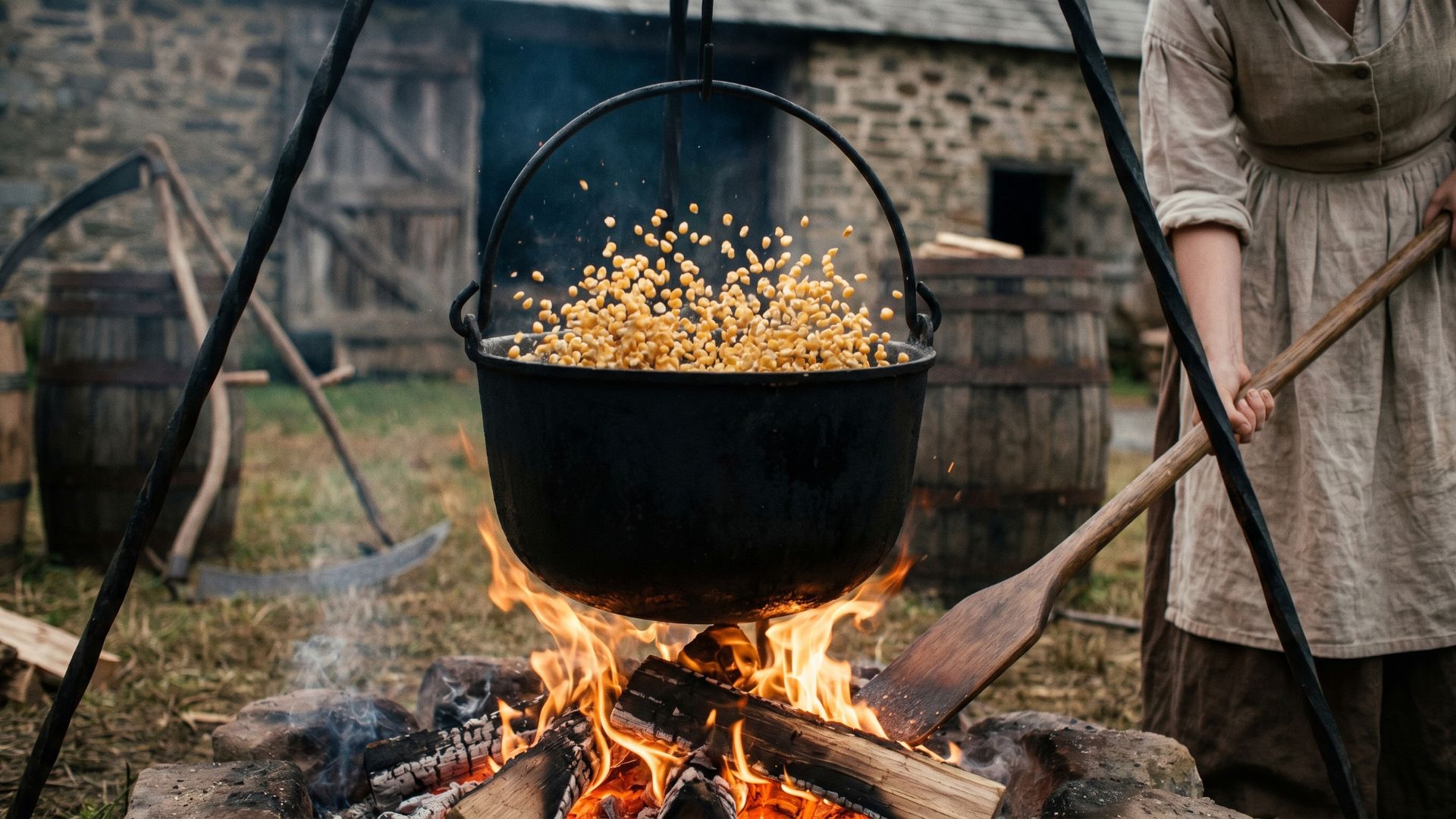 The specific, unique flavor profile that we explicitly recognize as modern kettle corn—the magical combination of fat, sugar, salt, and popped corn—originated with European farmers in the 18th century.
During this era, in the rural agricultural communities of Germany and the Netherlands, corn had become a widely grown staple crop. After a long, grueling day of intense manual labor during the harvest season, farmers and their families would look for a simple, cheap, and energy-dense treat to enjoy in the evening. They would take large, incredibly heavy cast-iron cauldrons—the exact same massive pots they routinely used for boiling water, rendering animal fat, or making soap—clean them thoroughly, and place them directly over the glowing coals of an open hearth fire.
They would heat rendered lard or beef tallow in the bottom of the cauldron, throw in handfuls of dried, conditioned corn kernels, and add whatever natural sweetener they happened to have in the pantry. In Europe at the time, this was often refined cane sugar or natural honey. As the intense heat caused the corn to violently pop, the fat and the melting sweetener would vigorously mix, coating the expanding kernels and creating a hardened, caramelized, candy-like shell.
This sweet and salty combination was an absolute revelation. It was not only incredibly delicious and calorie-dense, but the hard sugar coating actually acted as a highly effective natural preservative. The sugar created a barrier that kept humidity out, extending the shelf life of the popcorn and allowing it to be safely stored for days or weeks without going stale or molding.
A Timeline of Kettle Corn
| Era | Key Development in Kettle Corn History |
| 3000 BCE | Indigenous peoples in the Americas discover the popping properties of specific corn kernels. |
| Late 1700s | European farmers invent the process of batch-cooking corn, fat, and sugar in heavy cast-iron cauldrons. |
| 1800s | Westward-bound pioneers adapt the recipe, using molasses and raw honey as sweeteners on the trail. |
| 1890s-1930s | The invention of automated steam poppers and the rise of movie theaters heavily favor salty, mass-produced popcorn, leading to kettle corn’s decline. |
| Late 1990s | Historical reenactors revive the traditional, open-fire cooking method, sparking a massive modern renaissance. |
Westward Expansion: Pioneers on the Trail
When massive waves of German and Dutch immigrants began arriving in the United States in the mid-to-late 1700s, they brought their agricultural expertise, their heavy cast-iron cookware, and their treasured family recipes with them. Settling heavily in areas like Pennsylvania, these immigrants continued the tradition of making kettle corn, making it a staple of local community gatherings.
During the 19th century, as brave pioneers began migrating westward across the vast American frontier in covered wagons, kettle corn traveled right alongside them. It was the ultimate pioneer survival food: lightweight, non-perishable, and requiring only fire and a single pot to prepare. Cowboys, homesteaders, and gold miners adapted the traditional recipe based strictly on what ingredients were available to them on the harsh trail. While lard remained the primary cooking fat, refined white sugar was incredibly scarce and expensive on the frontier. Instead, pioneers frequently used dark molasses, maple syrup, or wild raw honey to sweeten the popping corn.
Throughout the entirety of the 1800s, sweet and salty kettle corn was an absolute staple at festive occasions, town hall gatherings, county fairs, and autumn harvest celebrations across the expanding nation.
The 20th Century Decline: The Industrial Theater Popcorn Boom
However, as the 20th century approached, the beloved snack experienced a sudden and dramatic decline in popularity. The sweeping industrial revolution brought about complex, automated commercial popcorn machines invented by Charles Cretors in the 1890s. These machines utilized steam power to pop corn uniformly in oil.
Simultaneously, the rise of the American movie theater industry in the 1920s and 1930s changed the way Americans consumed popcorn. Movie theaters pushed mass-market, heavily buttered, and purely salty popcorn. Sugar was deemed too messy for dark theaters and too difficult for automated machines to handle without burning. By the time microwave popcorn was invented in the 1980s, traditional sweet and salty kettle corn had been almost entirely forgotten by the general public, relegated to obscure historical footnotes.
The 1990s Renaissance: Living History and the Craft Food Movement
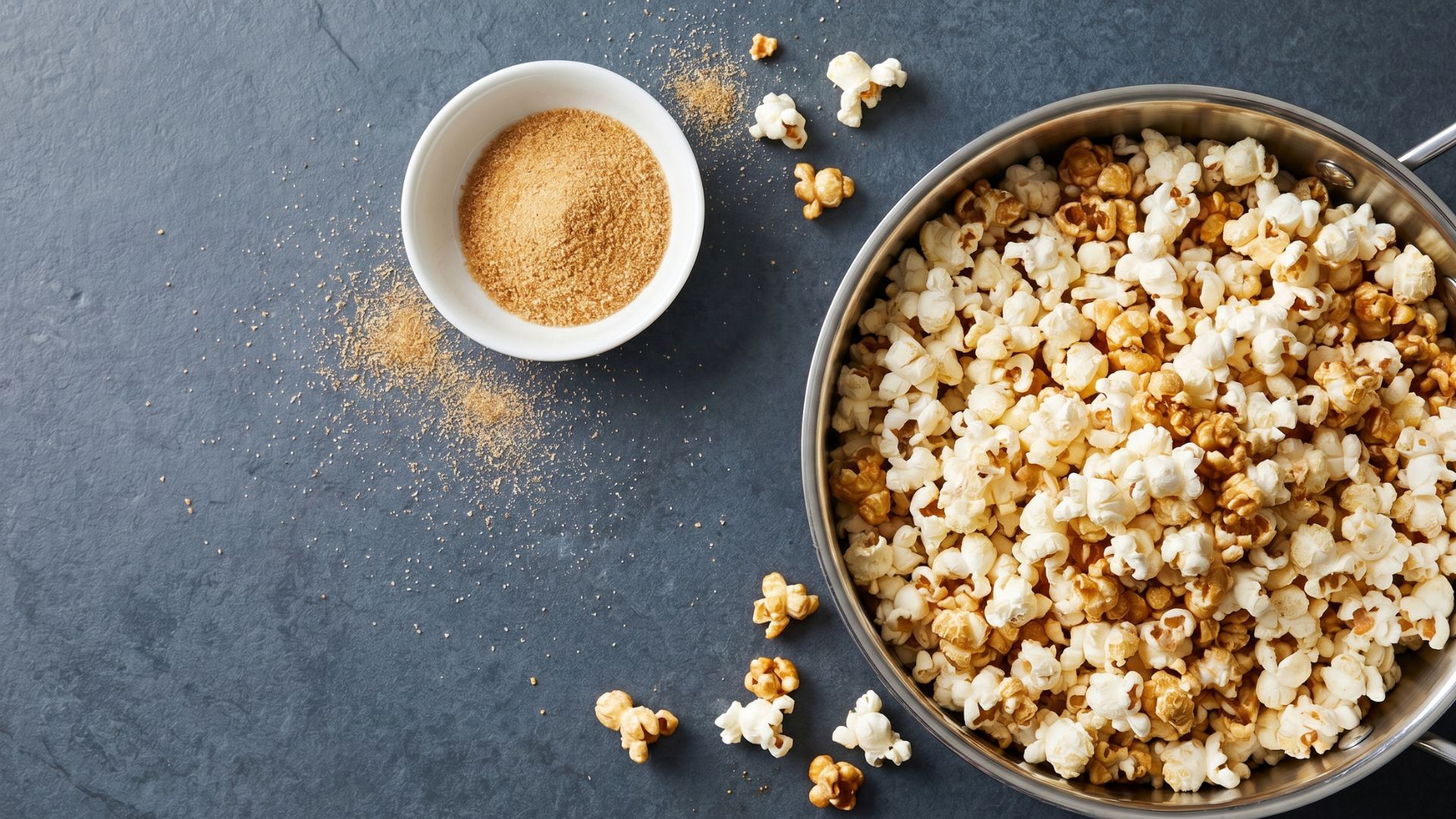 For decades, the massive historical pots sat empty. It wasn’t until the late 1990s and early 2000s that kettle corn experienced a massive, unprecedented cultural renaissance.
This revival began in a highly unlikely place: historical reenactments, specifically American Civil War and pioneer living history events. Food vendors who were looking to provide crowds with historically accurate snacks brought back the massive, traditional cast-iron and steel cooking kettles. They built open wood fires and used long wooden stirring paddles to recreate the 18th-century recipe.
The results were astonishing. The intoxicating aroma of caramelizing sugar wafting through the open air proved absolutely irresistible to modern palates accustomed only to artificial movie theater butter. From these niche historical reenactments, entrepreneurial kettle corn vendors quickly expanded their operations into modern, mainstream venues. Today, kettle corn is an absolute, non-negotiable necessity at farmers markets, craft fairs, street festivals, and major sporting events across the entire country.
Conclusion
The story of kettle corn is a remarkable journey through human history. It is a testament to culinary ingenuity, evolving from the ancient indigenous discovery of popping corn to a pragmatic preservation method on 18th-century European farms, and finally finding its way into the wagons of American pioneers. Surviving near-extinction during the industrial age of movie theater popcorn, its triumphant renaissance in the late 20th century proves that some culinary traditions are simply too delicious to be forgotten. Today, kettle corn stands as a nostalgic symbol of community gatherings, harvest festivals, and American comfort food.
At Crazy Dog Kettle Corn, we view ourselves not just as snack makers, but as dedicated stewards of this rich, deeply rooted culinary history. We honor the traditional, centuries-old methods by ensuring that every single batch we produce is painstakingly handcrafted, closely monitored, and stirred with care. We respect the time-honored balance of sweet and salty that our ancestors perfected over open hearth fires generations ago. We are proud to bring the nostalgia, the theatrical experience, and the undeniable premium quality of authentic, artisanal kettle corn straight to your modern events and living rooms. To secure a fresh, piping-hot batch of history for yourself, please visit crazydogkettlecorn.com or contact us today! and let us pop something truly special for you.