 The Industrial vs. Artisanal Snack Divide
Walk down the snack aisle of any major grocery store or supermarket, and you will find an overwhelming array of bagged popcorn and kettle corn options. They sit perfectly aligned on the shelves, uniform in size, predictably packaged, and readily available at a moment’s notice. However, for true snack enthusiasts and culinary purists, mass-produced kettle corn almost always falls flat. It often lacks the distinct, satisfying crunch, the complex caramelized flavor profile, and the delicate balance of salt that defines the real, authentic treat. The secret to that irresistible taste isn’t found in a top-secret artificial flavoring packet; it lies entirely in the traditional production method known as small-batch cooking.
Small-batch food production is not just a trendy marketing buzzword designed to sell products at a premium; it represents a fundamental, scientifically measurable difference in culinary chemistry and preparation. When kettle corn is produced in massive industrial facilities, the primary goals of the manufacturer are scale, speed, and shelf-stability. Continuous commercial fryers, massive hot-air poppers, and automated conveyor belts are utilized to process thousands of pounds of corn per hour. While incredibly efficient from a business standpoint, this industrialized method sacrifices the delicate nuances of temperature control, flavor development, and ingredient integrity.
Small-batch cooking, on the other hand, strictly prioritizes quality over sheer quantity. It allows dedicated artisans to manually control every single variable of the popping process, from the heat of the oil to the exact moment the sugar caramelizes.
Comparing Production Methods
| Feature | Industrial Mass-Production | Artisanal Small-Batch |
| Cooking Method | Continuous hot air or massive oil conveyors | Individual open kettles over direct flame |
| Flavor Application | Sprayed on as dry dust or liquid slurry post-pop | Caramelized directly onto the kernel during the pop |
| Ingredient Quality | Cheap bulk fats, artificial flavors, preservatives | Premium high-smoke oils, real cane sugar, sea salt |
| Kernel Type | Standard butterfly kernels (prone to shattering) | Premium mushroom kernels (dense and spherical) |
| Quality Control | Automated machines aiming for baseline averages | Human artisan monitoring sound, sight, and smell |
The Science of the Pop and Caramelization
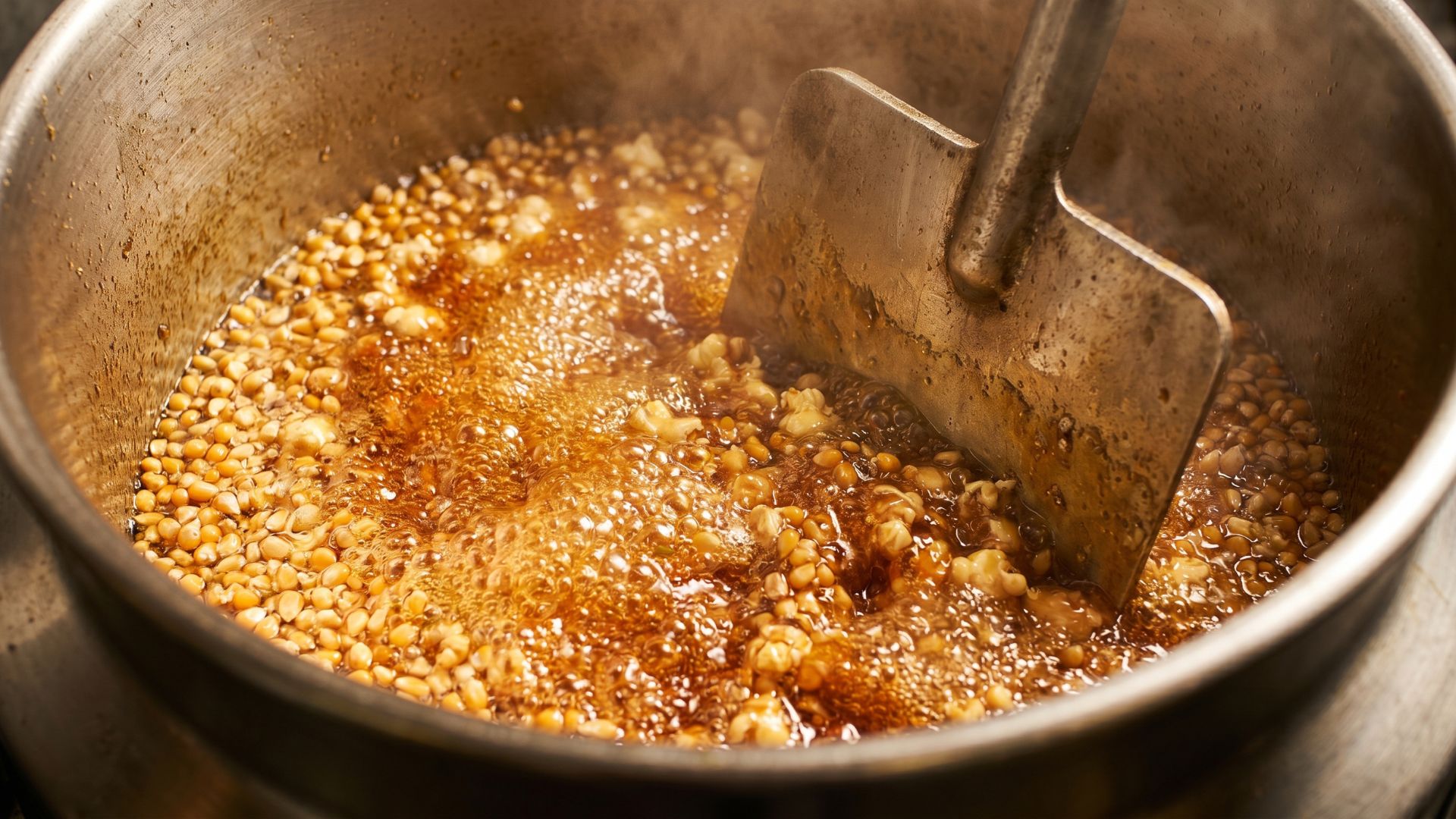 To truly understand why small-batch kettle corn tastes vastly superior to its factory-made counterparts, it is essential to examine the intricate physics and chemistry of the cooking process. In continuous industrial popping facilities, kernels are often blasted with superheated air or run rapidly through a conveyor belt of hot oil. Because melting sugar and salt can easily gum up these massive, expensive machines, the flavoring is almost always applied after the popcorn has already popped. This is usually done using a dry, artificially flavored powder or a wet slurry that coats the exterior of the popcorn unevenly, leading to a spongy texture or a chemical aftertaste.
In authentic small-batch cooking, the process is entirely different and infinitely more complex. The high-heat oil, the raw popcorn kernels, and the pure granulated sugar are all introduced to a large, open metal kettle simultaneously. This simultaneous cooking is the most crucial step of the entire operation because it allows for a highly controlled, natural chemical reaction. According to food science research on the Maillard reaction, managing heat transfer in targeted, smaller batches prevents the rapid degradation of delicate flavor compounds and stops sugars from developing a bitter, burnt, or acrid taste.
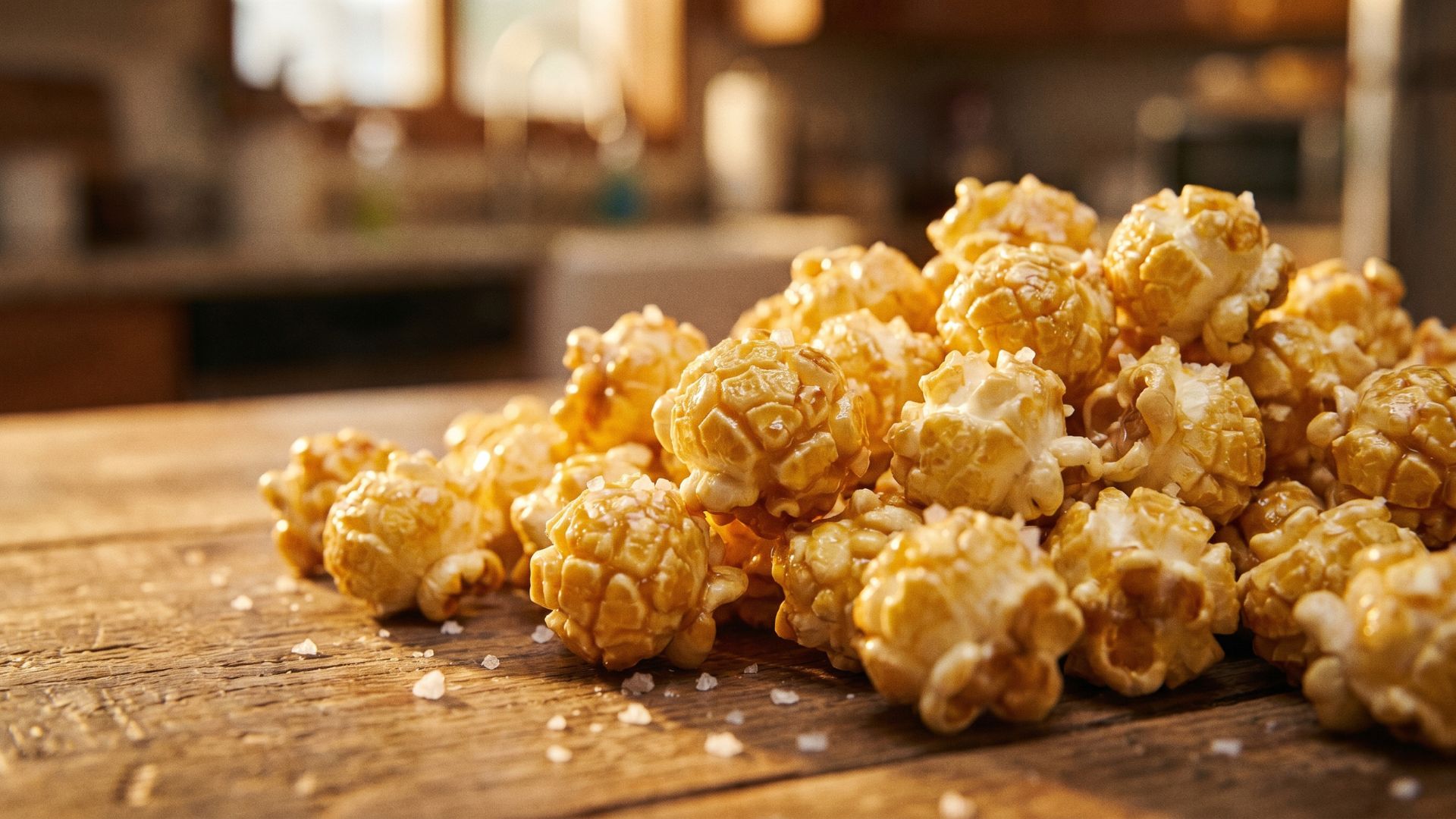
As the temperature in the kettle steadily rises, the sugar melts and begins to caramelize directly in the hot oil, transforming from a simple sweet crystal into a complex, amber-colored glaze with notes of butterscotch and roasted nuts. Simultaneously, the moisture inside the hard endosperm of the popcorn kernel turns to steam. When the internal pressure reaches roughly 135 psi (at a temperature of around 347°F or 175°C), the kernel’s hull breaches, and the starch violently expands. In that exact fraction of a second, the expanding, spongy starch grabs onto the suspended, highly heated caramelized sugar and oil mixture swirling in the kettle. This creates a beautifully hard, crystalline shell of sweet and savory goodness that is physically baked into the exterior of the kernel, rather than just resting loosely on the surface.
The Anatomy of the Perfect Kernel
Not all corn is created equal, and the specific type of agricultural product used makes a monumental difference in the final product. Mass-produced popcorn brands often use whatever bulk kernels are cheapest on the global commodity market. These are typically “butterfly” kernels—the type of popcorn that pops into wild, irregular, winged shapes. While butterfly kernels are great for holding liquid butter at a movie theater, their fragile “wings” tend to shatter when coated with heavy, molten sugar, resulting in a bag full of broken pieces and sugary dust.
Small-batch artisans are incredibly selective about their raw ingredients. Premium kettle corn requires a specific genetic variety of popcorn known as the “mushroom” kernel. When a mushroom kernel pops, it forms a dense, compact, and highly spherical ball. This round surface area is structurally superior and explicitly designed to hold a thick, even coating of hot caramel or sugar glaze without crumbling or breaking apart during the vigorous mixing process.
Furthermore, the moisture content of the unpopped kernel must be meticulously monitored. The ideal moisture level for a kernel is exactly 13.5% to 14%. If the kernel is too dry, it will not build up enough internal steam pressure to pop, resulting in tooth-breaking “old maids.” If it is too wet, the resulting popcorn will be chewy rather than crispy. Small-batch producers purchase premium, top-tier kernels that are carefully cured and stored in climate-controlled environments to maintain this perfect moisture equilibrium.
The Role of Premium Oils and Simple Ingredients
When scaling a recipe for mass production, massive manufacturers inevitably have to introduce chemical additives, artificial preservatives, emulsifiers, and synthetic flavorings to ensure shelf stability and uniform taste across millions of bags shipped worldwide. The fundamental math of a recipe changes dramatically when multiplied by a factor of ten thousand.
Small-batch cooking effectively eliminates this modern culinary problem. By keeping the batches deliberately limited, producers can rely on a shockingly short list of simple, high-quality, recognizable ingredients:
-
High-Smoke Point Oils: Artisans utilize premium oils that can withstand the intense heat required for popping without breaking down and creating free radicals or off-flavors. While industrial makers use cheap, highly refined bulk fats, craft makers often utilize specialized corn, canola, or coconut oils that provide a clean, neutral flavor profile, allowing the natural taste of the roasted corn and sugar to shine through.
-
Pure Cane Sugar: Instead of relying on high-fructose corn syrup, artificial sweeteners like sucralose, or chemical flavor dusts, small batches utilize real, pure granulated cane sugar. As it melts, real sugar provides a deep, authentic caramelization that synthetic compounds simply cannot replicate.
-
Real Sea Salt: Instead of chemical sodium compounds or iodized table salt with anti-caking agents, small-batch kettle corn is often finished with natural, coarse sea salt. This provides a cleaner, brighter, and more immediate savory hit on the palate.
The Human Element: Artisan-Crafted Perfection
Perhaps the most significant and irreplaceable advantage of small-batch kettle corn is the constant presence of a highly trained human artisan. Automated machines are programmed for averages, but agricultural products like corn are entirely natural and highly variable. The size, starch density, and moisture content of a popcorn kernel can change depending on the season, the region it was grown in, or even the specific harvest yield.
An experienced kettle corn maker watches, listens, and intuitively adjusts to the batch in real-time. They know precisely when the oil is shimmering at the exact right temperature to add the corn. They understand how the humidity in the air on a given day will affect the melting point of the sugar. Most importantly, they listen closely to the cadence of the pops. As the popping reaches its chaotic crescendo and then begins to slow down, the artisan knows exactly when to pull the heavy kettle from the heat. Waiting even five seconds too long will result in the delicate sugar crossing the line from perfectly caramelized to acrid and burnt. This intense, manual level of attention to detail ensures that every single batch achieves the absolute optimal ratio of fluffy interior starch to crunchy, sweet exterior.
Conclusion
The debate between mass-produced snacks and artisanal treats is easily settled the moment you taste authentic, handcrafted kettle corn. Small-batch cooking isn’t merely a nostalgic nod to the past; it is a superior culinary method backed by food science. By controlling the Maillard reaction, utilizing premium mushroom kernels, avoiding chemical additives, and relying on the keen senses of a human artisan, small-batch producers create a product that factory conveyor belts simply cannot replicate. The result is a profoundly satisfying snack that honors the rich history of American comfort food while delivering an unparalleled depth of flavor.
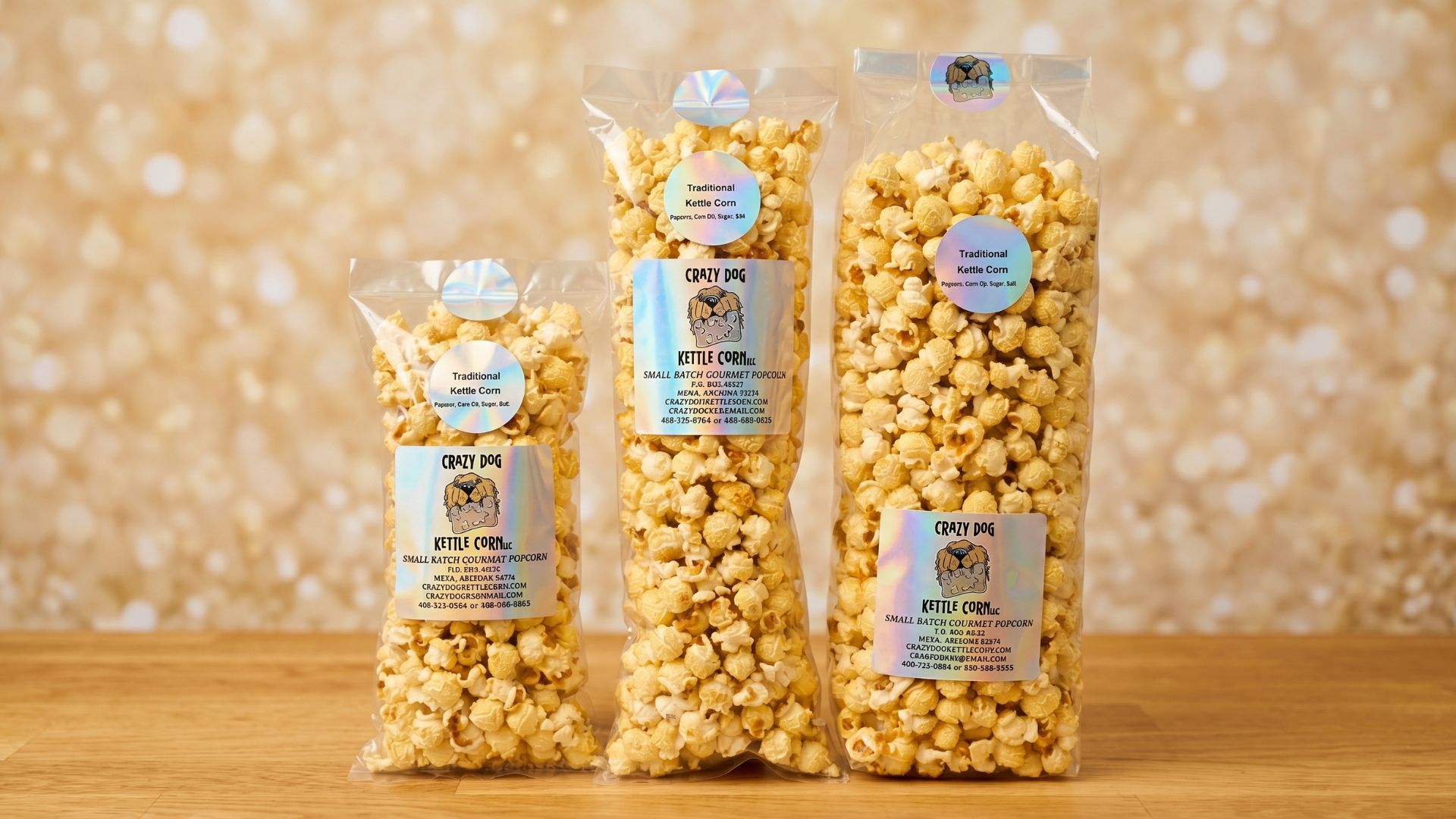
At Crazy Dog Kettle Corn, we adamantly refuse to compromise on these time-honored traditions. We handcraft our kettle corn in small, meticulously monitored batches to ensure that every single bag delivers the satisfying crunch, the perfectly balanced flavor, and the premium quality you expect. Whether you are stocking up the pantry for a family movie night, planning a massive corporate event, or looking for the perfect party favor, we guarantee an unparalleled snacking experience. If you are ready to finally taste the massive difference that artisanal cooking makes, explore our offerings at crazydogkettlecorn.com or contact us today! to let us bring the freshest, most delicious kettle corn directly to your doorstep.